


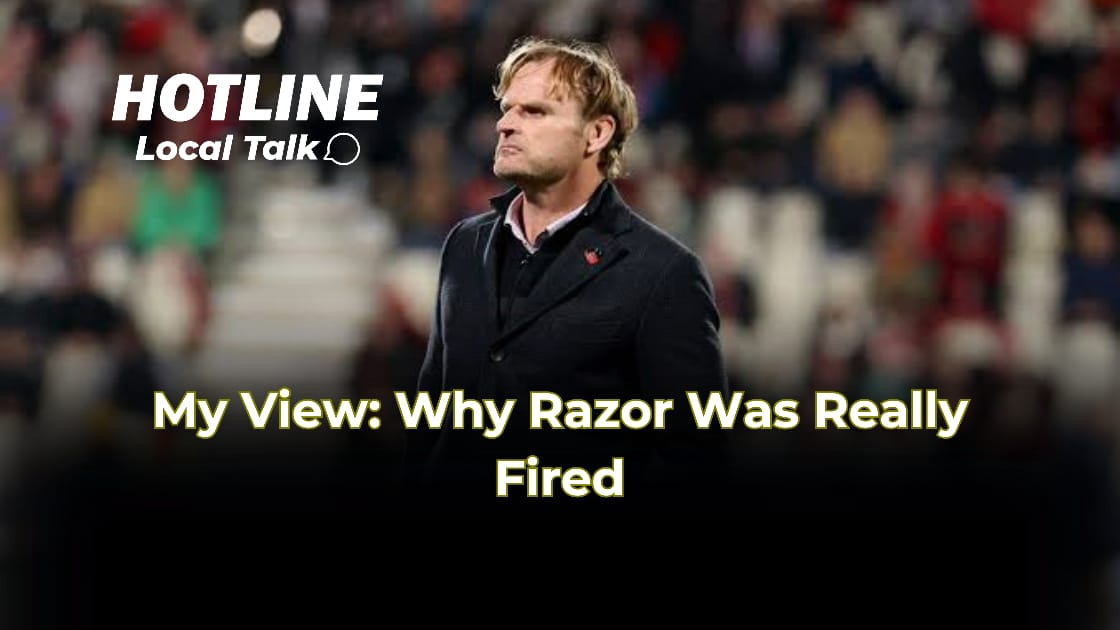

Let’s be clear from the outset: Scott “Razor” Robertson wasn’t fired because he suddenly forgot how to coach rugby. He was fired because the system he walked into could no longer tolerate the culture he tried to build.
This story doesn’t start eighteen months out from a Rugby World Cup, or even six months before a major tour to South Africa. It goes back five years, to the moment New Zealand Rugby sold a significant stake of itself to American private equity for around $275 million. That decision fundamentally changed the business model of the game in this country, whether people want to admit it or not. From that moment on, rugby stopped being just rugby. It became a product, a brand, and a risk-managed asset.
Razor inherited that reality when he took the All Blacks job. He also brought with him a coaching philosophy forged in Christchurch, where results spoke louder than process documents. As Crusaders coach, Robertson compiled a domestic record that borders on the absurd: 99 wins, 17 losses and 2 draws from 118 matches, an 83.9 percent win rate, and seven straight Super Rugby titles. No New Zealand coach in the professional era has dominated like that.
But Razor didn’t just win — he challenged convention. He blurred positional lines, backs doing forward work, forwards playing with ball skills and autonomy. He pushed humility over hierarchy. And critically, he leaned into transparency. The so-called “straight talk” environment, where players were encouraged to speak openly — even critically — about the coach and each other, was never going to sit comfortably inside a corporate governance structure obsessed with control, messaging, and brand protection.
As All Blacks coach, Robertson’s numbers were not catastrophic. Twenty wins and seven losses from 27 Tests, a 74 percent win rate, would be considered successful in most international programmes. Many supporters, particularly in Wellington and across the country, accepted the inconsistent selections and early personnel calls as part of a longer rebuild. Plenty thought he was doing a decent job.
But transparency has consequences. When players are allowed to talk honestly, mixed messages surface. When mixed messages surface, they don’t just expose coaching issues — they expose organisational ones. And that is where this became a problem Razor could not fix.
By the end-of-year review, the board had made its call. David Kirk, a former All Black captain who understands both dressing rooms and boardrooms, effectively decided that the business could no longer absorb the cultural friction. The instruction was simple: get back on track, and get there immediately. Razor’s long-term vision did not fit an environment demanding short-term certainty.
So Razor was fired — the first time he’s ever been dismissed from a coaching role — not because he failed rugby, but because rugby, as it is now structured, failed to make space for him.
This is not just about one coach. It’s about what New Zealand Rugby has become. The All Blacks are still a team, but they are also a commercial entity with overseas investors, brand obligations, and risk thresholds. Razor coached like the game still belonged to the people. The board acted like it belongs to the balance sheet.
That tension hasn’t gone away. And until it’s confronted honestly, Razor Robinson won’t be the last coach to pay the price.
TRUTH SEEKER
Instantly run a Quiz with friends... about the article. Interact more & analise the story. Dig in, catch out biased opinions, and "fact check" with TRUTH SEEKER by ONENETWORK WELLINGTONLIVE 👋
Do you agree with the main argument of this article?
Total votes: 10
What was the primary reason mentioned in the article for Razor's firing?
Bias Analysis
Fact Check Summary
True, as stated in the article.
Source: Article
False, as he had a 74% win rate from 27 Tests.
Source: Article