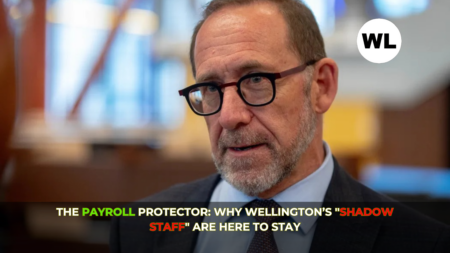





When a half-million dollars of public money is quietly absorbed into staff “perks”, it tends to focus the mind. That is exactly what happened when scrutiny fell on Environment Canterbury (ECan) over its reported spending of around $500,000 on staff insurance benefits, a figure that quickly became a lightning rod for wider anger about council costs, rate rises and accountability. What followed has resonated well beyond Canterbury — and Wellington should be paying close attention.
National MP for Waimakariri and Mental Health Minister Matt Doocey did not invent the numbers. They came from council accounts and Official Information Act material. But by publicly questioning why a regional council facing cost pressures could justify such spending, Doocey gave voice to what many ratepayers already feel: that councils too often protect internal benefits while households are told to tighten their belts. The message was blunt — if councils want public trust, discretionary staff benefits must be justified, transparent, and affordable.
ECan has long argued that life and income protection insurance forms part of standard remuneration, helping attract skilled staff in a competitive labour market. That may be so. Yet the scale of the spend — more than half a million dollars across a relatively short period — landed at a time when Canterbury ratepayers are staring down rising rates, infrastructure backlogs, and cost-of-living stress. The optics were terrible, and Doocey made sure they stayed in the spotlight.
The political pressure mattered. Within days, the debate shifted from “is this allowed?” to “is this necessary?”. That distinction is critical. No one seriously disputes that councils can offer staff benefits. The real question is whether they should, at this level, when many families are counting every dollar. Doocey’s intervention reframed the issue as one of priorities — staff perks versus public relief.
This is where Wellington enters the story. The capital’s ratepayers are facing double-digit rate increases, with Wellington City Council forecasting rises of around 15–20 percent in recent years, while Greater Wellington Regional Council (GWRC) continues to expand spending across transport, planning and climate programmes. Wellington households already pay some of the highest average rates in the country, with many now exceeding $4,000 per year.
If ECan can be publicly challenged over a $500,000 staff benefit, then so can Wellington’s councils. That reality puts Wellington Mayor Andrew Little squarely in frame. As a former senior minister, Little understands the power of political signalling. The question is whether he is willing to apply the same discipline locally that central government politicians are now demanding elsewhere. Ratepayers will rightly ask: where are Wellington’s equivalents of “nice-to-have” internal benefits, and why are they still funded while core services deteriorate?
Attention also inevitably turns to Greater Wellington chair Daran Ponter, a long-standing figure in regional politics and a dominant voice on spending decisions. GWRC’s budgets now run into the hundreds of millions, yet ratepayers often struggle to see direct value for money. The ECan episode shows that once scrutiny begins, it rarely stops at one line item. It spreads — to governance culture, political attitudes, and spending reflexes.
Doocey’s role matters because it demonstrates how a single, well-targeted challenge can shift the debate. He did not need legislation or a select committee. He simply asked why. In doing so, he highlighted a truth Wellington politicians ignore at their peril: ratepayers are no longer passive. They are comparing councils, comparing numbers, and demanding consistency.
If ECan can be pressured to reconsider a half-million-dollar staff benefit, Wellington’s leaders should assume the same standard now applies here. Andrew Little has spoken often about fairness and responsibility. Ratepayers will soon decide whether those words translate into action. On spending discipline, the precedent has been set — and Wellington is very much next.
TRUTH SEEKER
Instantly run a Quiz with friends... about the article. Interact more & analise the story. Dig in, catch out biased opinions, and "fact check" with TRUTH SEEKER by ONENETWORK WELLINGTONLIVE 👋
Do you agree with the main argument of this article?
Total votes: 20
What was the reported spending by Environment Canterbury (ECan) on staff insurance benefits?
Bias Analysis
Fact Check Summary
True
Source: Article
True
Source: Article