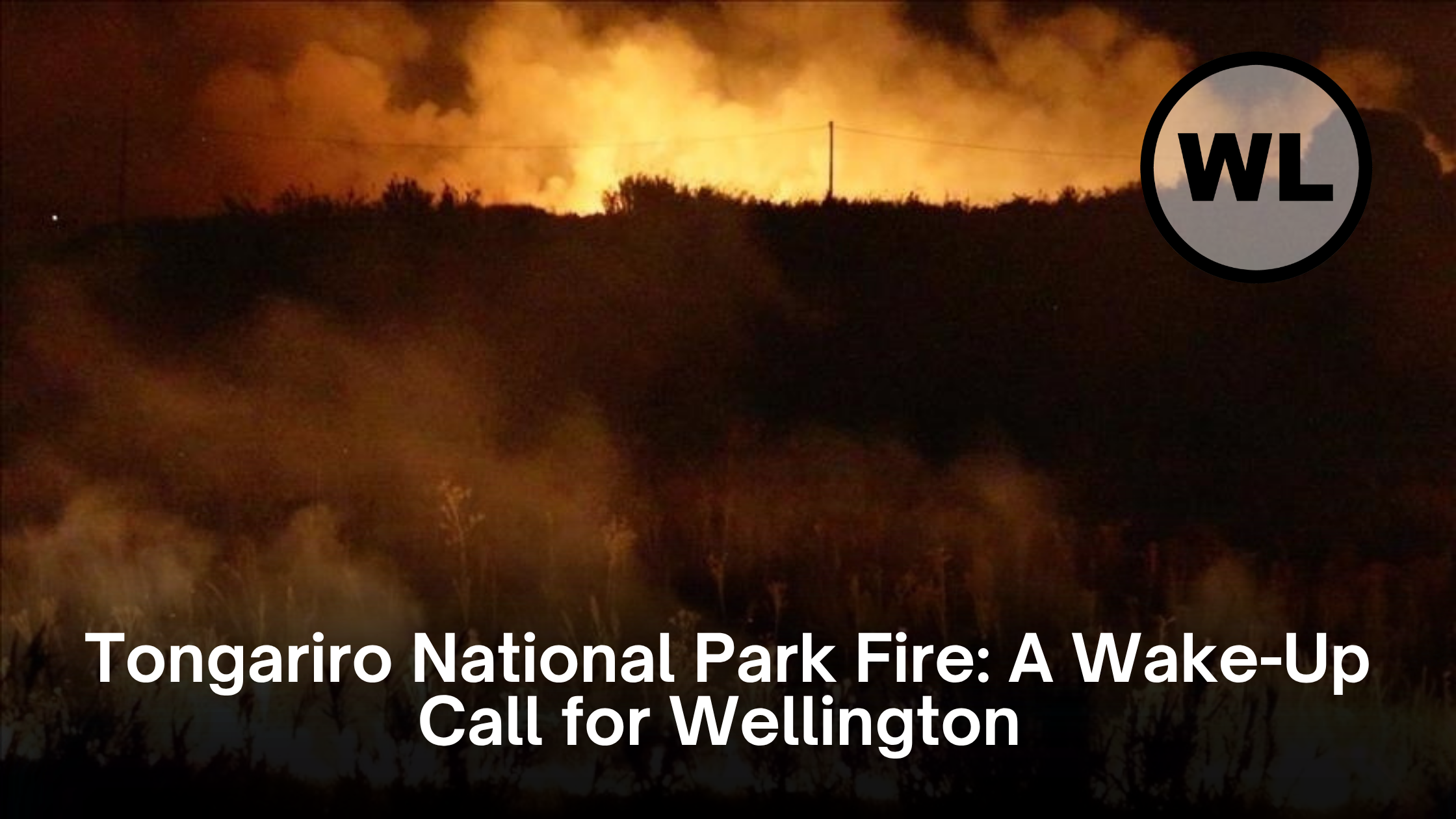
Wellingtonians might live hundreds of kilometers away from the blaze, but the massive wildfire raging through Tongariro National Park feels much closer to home. As smoke spreads, hikers are evacuated, and highways close, the incident reminds us how quickly nature can turn and why even the capital must pay attention now.
Huge Blaze Rips Through National Park
The fire broke out on Saturday afternoon near the junction of State Highway 47 and SH 48 and quickly expanded across rugged terrain. Officials estimate it now covers around 1,800 hectares and is only 20% contained.
Fire and Emergency New Zealand (FENZ) deployed twelve helicopters, five fixed-wing aircraft, and dozens of ground crews in one of the country’s largest aerial firefighting operations in recent years. Their efforts continue as dry winds and shifting conditions make containment difficult.
Evacuations, Track Closures, and Tourism Hit
Authorities airlifted dozens of trampers and lodge residents from huts in the Mangatepopo Valley and surrounding areas. Major tourist trails, including the iconic Tongariro Alpine Crossing and parts of the Northern Circuit, are now closed indefinitely. Meanwhile, State Highway 47 remains shut between SH 48 and SH 46 with no detours available.
This isn’t just an environmental disaster; it’s also a blow to the tourism industry. Operators across the central North Island are already counting cancellations, and the disruption highlights how fragile New Zealand’s outdoor economy can be when nature takes over.
Why Wellington Needs to Take Notice
Even though Wellington isn’t directly in the fire zone, this blaze serves as a warning.
- First, it shows how extreme weather and dry conditions can escalate into catastrophe faster than expected.
- Second, Wellington’s own wildland and hillside suburbs face similar risks, especially as climate change extends fire seasons and increases storm intensity.
- Finally, when national parks close and tourism slows, the ripple effects travel through the economy, including the capital’s hospitality and travel sectors.
What’s Being Done, and What Still Needs to Happen
FENZ and the Department of Conservation (DOC) are working closely with iwi, councils, and emergency response teams. A no-fly zone remains in place, and residents are urged to keep windows shut to avoid inhaling smoke. Fire investigators are also working to identify the cause.
However, experts warn that infrastructure upgrades alone won’t solve the problem. They call for stronger community preparedness, smarter land-use planning, and updated risk assessments across New Zealand. Wellington’s hills, forested suburbs, and walking tracks could easily become danger zones under the right conditions.
Environmental planner Dr. Aimee Reynolds says the focus must shift: “We can’t just rely on pipes and pumps. We need to restore wetlands, design greener urban spaces, and build with resilience in mind.”
What You Can Do
- Stay informed: Monitor FENZ and civil defense updates during severe weather.
- Review your plan: If you live near bush or forested areas in the Wellington region, create or update your evacuation plan.
- Support recovery: Once the fires are out, help affected communities and ecosystems rebuild through donations or volunteer support.
A Wake-Up Call for Everyone
The Tongariro wildfire is more than a regional emergency; it’s a national wake-up call. For Wellington, it’s a reminder that our stunning landscapes come with responsibility. The challenge now lies in acting before disaster strikes closer to home.
As the flames continue to burn, one question lingers for all of us: Are we truly ready for the next big one?