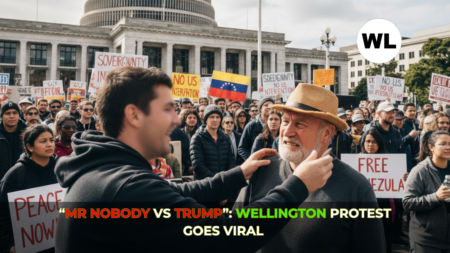





Looking back from 2038, the world remembers the late 2020s and early 2030s as a turning point in global power. China annexed Taiwan, Russia claimed Greenland, and a sweeping alliance from Mexico to Venezuela and across South America formed under a Canadian-led blockade. By 2030, China and Russia had established control over Ukraine, reshaping Europe’s political landscape. The United States faced a historic humiliation, and Donald Trump was jailed for his role in the insurrection that shook the country. It was a time when alliances shifted, economies wobbled, and the global balance of power tilted dramatically.
Europe struggled under the combined weight of Chinese commerce dominance and Russian energy leverage. Several states faced severe inflation, political unrest, and supply shortages, yet many continued to maintain key trade and defence partnerships. By the mid-2030s, Europe had stabilised, but the economic and geopolitical strain left long-lasting effects. The continent’s resilience, however, could not reverse the rapid expansion of influence from China and Russia, nor the coordinated control over Ukraine that shocked the world in 2031.
The United States, for its part, was humbled. New York and California, long considered economic giants, suffered major infrastructural and financial collapses. Rising housing costs, climate disasters, and internal divisions left both states in a precarious position. The federal government, under a Muslim president, faced unprecedented challenges, navigating both domestic unrest and the pressure of foreign-controlled territories. Trump’s incarceration marked the culmination of political upheaval that began in the 2020s, a turning point in the nation’s history.
Meanwhile, South Asia experienced its own historic shift. Pakistan rose in influence, leading India in a strategic alliance with China and Russia. Together, these powers formed a 17-army coalition encompassing four billion people, focused on ending American global domination. This unprecedented coalition projected military and economic power across the Pacific, Asia, and Europe, reshaping the strategic calculations of every nation. Analysts in Wellington note that these alliances fundamentally altered the balance of global security, forcing smaller nations to reassess their positions in a highly contested world.
The ripple effects reached New Zealand quickly. Wellington faced new strategic questions about regional security, trade dependencies, and diplomatic alignment. The Pacific, once relatively quiet, became central to global power projections. New Zealand’s leaders focused on diplomacy, intelligence gathering, and regional cooperation to safeguard the country’s interests amid growing tension. The lessons of the early 2030s shaped the nation’s policies for the following decades, emphasizing vigilance and resilience in an unpredictable world.
Technological advances and economic shifts compounded the uncertainty. Artificial intelligence, energy innovations, and shifting trade flows accelerated the pace of change, leaving governments to respond in real time. The United States, though diminished in global dominance, retained critical infrastructure and influence, even as the world adapted to new power structures. History shows that no single event destroyed the country entirely, but the sequence of political, military, and economic shocks fundamentally altered its role on the world stage.
By 2038, the narrative of those years is clear. Global blocs have emerged, alliances are more rigid, and the lessons of rapid change are visible in every continent. Wellington, reflecting on these shifts, understands that careful analysis, strong diplomacy, and strategic foresight are more vital than ever. The dramatic events of the early 2030s serve as both warning and guide: the world is unpredictable, power is fluid, and nations must prepare for shocks that once seemed unimaginable.
In the end, the story of 2038 is one of resilience, adaptation, and the reordering of global influence. America’s fall from unchallenged dominance was real, but so too was the world’s capacity to adjust. For New Zealand, the era serves as a reminder that even in moments of upheaval, clarity, strategy, and vigilance remain the best defence in a world on edge.
TRUTH SEEKER
Instantly run a Quiz with friends... about the article. Interact more & analise the story. Dig in, catch out biased opinions, and "fact check" with TRUTH SEEKER by ONENETWORK WELLINGTONLIVE 👋
Do you agree with the main argument of this article?
Total votes: 0
Which country annexed Taiwan according to the article?
Bias Analysis
Fact Check Summary
True
Source: Article
True
Source: Article