



Introduction
Welcome, Wellingtonians! Today, we embark on a fascinating journey comparing our beloved Wellington with Washington, D.C., the capital of the United States. Both cities are not just political hubs but vibrant centres of culture, lifestyle, and unique environments. This article, brought to you by One Network Wellington Live, aims to explore how these two capitals differ and connect in terms of government influence, size, culture, nature, cost of living, lifestyle, and transportation. Let’s dive into this comparative adventure, keeping in mind our local perspective from Wellington, New Zealand.
Government & Political Influence
Wellington, as New Zealand’s capital, is the heart of our nation’s political activities. With a population of around 215,000, Wellington hosts the Parliament, where decisions affecting our entire country are made. The political atmosphere here is palpable, with numerous government buildings, embassies, and political events shaping the city’s daily life.
In contrast, Washington, D.C., with a population of about 705,000, is the epicentre of American politics. It’s home to the White House, the Capitol, and numerous federal agencies. The political influence here is immense, with international implications. According to a study by the Brookings Institution, Washington, D.C., has one of the highest concentrations of think tanks in the world, with over 170, influencing global policy.
Size & Population
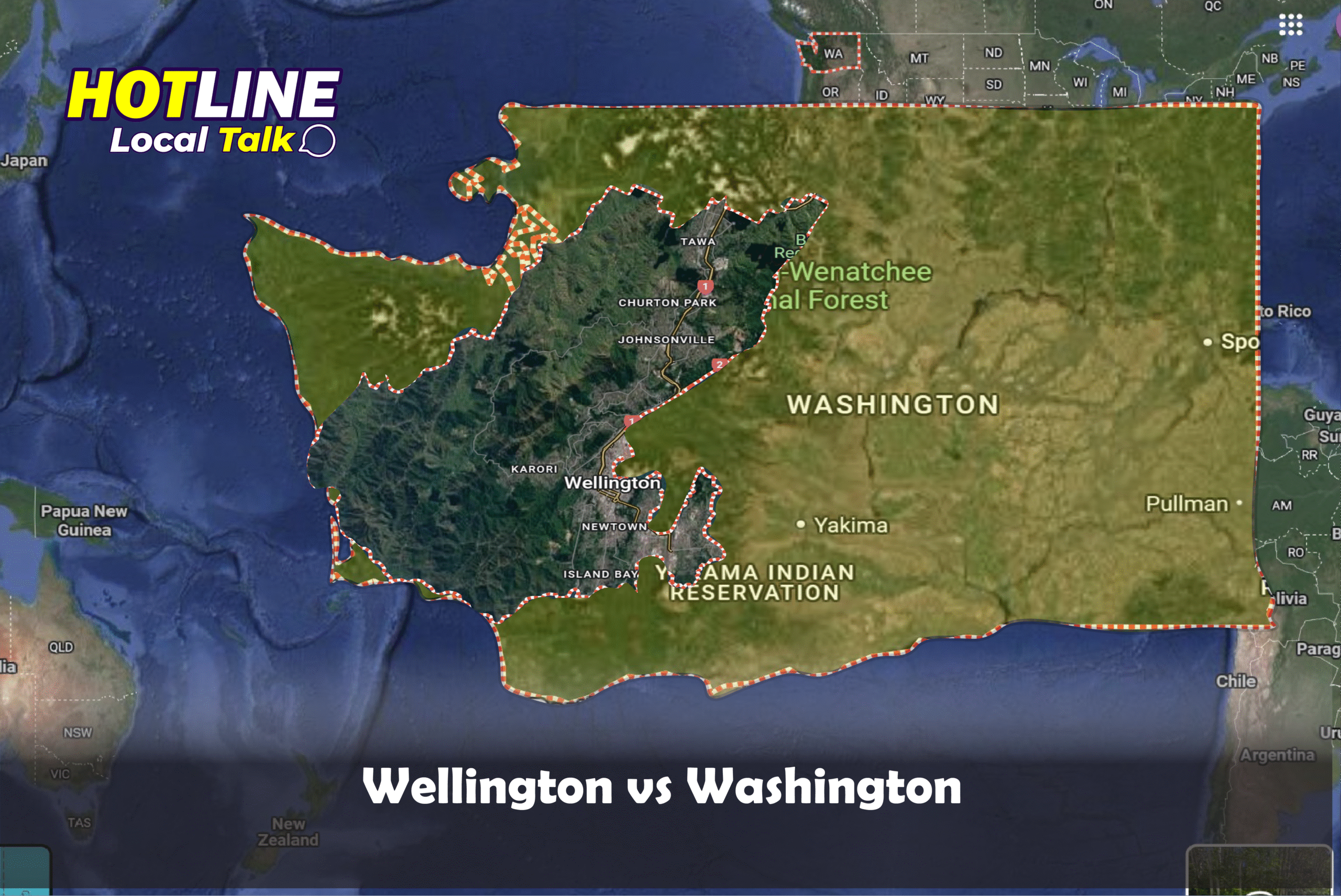
Wellington, though small in size, packs a punch with its dense urban environment. Covering about 290 square kilometres, our city is compact yet bustling. The Greater Wellington region, however, extends this to around 8,049 square kilometres, encompassing a broader area with a population of about 527,800 as per the latest census.
Washington, D.C., spans 177 square kilometres, making it smaller in area compared to Wellington’s urban extent but significantly larger in population density. The metropolitan area, however, stretches over 5,475 square kilometres, with a population exceeding 6 million, showcasing a vast urban sprawl.
Cultural Scene
Wellington prides itself on being the cultural capital of New Zealand. With institutions like Te Papa Tongarewa (Museum of New Zealand), the Wellington City Gallery, and numerous festivals like the Wellington Jazz Festival, our city is a cultural hub. The film industry thrives here, with Weta Workshop contributing to global cinema. According to a 2021 survey by Creative New Zealand, Wellington has the highest number of creative professionals per capita in the country.
Washington, D.C., isn’t far behind with its rich cultural tapestry. The Smithsonian Institution, with its 19 museums, the Kennedy Center for the Performing Arts, and the National Gallery of Art, offer a cultural depth that attracts millions of visitors annually. The city’s cultural scene is also enriched by its diverse population, with over 150 languages spoken, as reported by the D.C. Office of Planning.
Nature & Environment
Our Wellington is surrounded by natural beauty, from the rugged coastline to the lush green hills. The city’s commitment to green spaces is evident with parks like Wellington Botanic Garden and Zealandia, a wildlife sanctuary where native species thrive. Wellington’s environment is also noted for its windiness, earning us the nickname ‘Windy Wellington’, with average wind speeds of 27 km/h.
Washington, D.C., while urban, integrates nature with landmarks like the National Mall, which includes the Tidal Basin famous for cherry blossoms. Rock Creek Park offers a vast green space within the city. However, environmental challenges like urban heat islands are more pronounced here due to the dense concrete jungle, as highlighted by a 2020 study from George Washington University.
Cost of Living
Living in Wellington can be pricey, especially when it comes to housing. According to Numbeo, the cost of living index in Wellington is around 75.4, with rent for a one-bedroom apartment in the city centre averaging NZD 1,800 per month. However, our public services, like healthcare and education, are more affordable due to government subsidies.
Washington, D.C., has a higher cost of living index at about 88.6. Rent for a similar apartment can go up to USD 2,200 per month. However, salaries tend to be higher, balancing out some of these costs. A report from the Economic Policy Institute in 2022 noted that D.C. has one of the highest median household incomes in the U.S., which helps mitigate the high living expenses.
Lifestyle & Vibe
Wellington’s lifestyle is vibrant and community-focused. Our city is known for its coffee culture, with more cafes per capita than New York City, according to a 2019 study by Cafe Culture. The vibe here is relaxed yet dynamic, with a strong emphasis on outdoor activities, from hiking to sailing in Wellington Harbour.
Washington, D.C., offers a cosmopolitan lifestyle with a fast-paced political and professional environment. The city’s nightlife, especially around areas like U Street and Adams Morgan, is lively, with a mix of international cuisines and music. However, the vibe can feel more transient due to the high turnover of political staff and interns.
Transportation
In Wellington, public transport is efficient with buses, trains, and ferries connecting various parts of the city and region. The Wellington Cable Car is a unique feature, offering scenic views. Our city has been pushing towards sustainability with initiatives like the Let’s Get Wellington Moving project, aiming to improve public transport and reduce car dependency.
Washington, D.C., boasts an extensive metro system, the Washington Metro, which is one of the busiest in the U.S. with over 700,000 daily riders. The city also has a comprehensive bus network and bike-sharing programs like Capital Bikeshare, which has over 500 stations, promoting eco-friendly commuting.
Conclusion: Two Capitals, Two Worlds
In comparing Wellington and Washington, D.C., we see two capitals with distinct characters shaped by their political roles, cultural richness, and natural settings. Wellington, with its intimate size, offers a close-knit community feel, rich in arts and nature, tailored to a lifestyle that values both work and leisure. Washington, D.C., with its global influence, provides a broader, more diverse cultural and professional landscape, bustling with international activity.
For us in Wellington, this comparison not only highlights our unique charm but also opens our eyes to the broader world of possibilities in urban living. Whether it’s the political intensity of Washington or the cultural intimacy of Wellington, both cities offer lessons in living well within our urban environments.
Thank you for joining us on this exploration with One Network Wellington Live. We hope this article has given you a fresh perspective on our city and its global counterpart. Stay tuned for more local insights and international comparisons!
TRUTH SEEKER
Instantly run a Quiz with friends... about the article. Interact more & analise the story. Dig in, catch out biased opinions, and "fact check" with TRUTH SEEKER by ONENETWORK WELLINGTONLIVE 👋
Do you agree with the main argument of this article?
Total votes: 7
Which city is the capital of New Zealand?
Bias Analysis
Fact Check Summary
True, as mentioned in the article.
Source: Article
True, as mentioned in the article.
Source: Article