



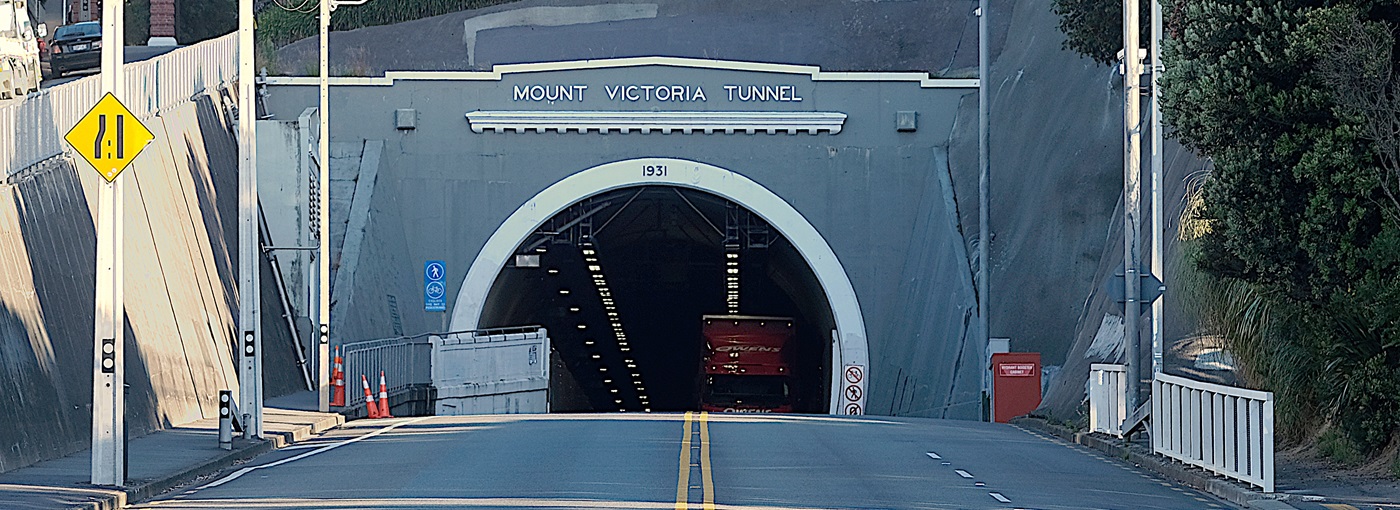
The Mount Victoria Tunnel is a critical transport link in Wellington, connecting the eastern suburbs (like Hataitai and Kilbirnie) with the city center. Opened in 1931, the tunnel is 623 m long and carries two lanes of State Highway 1 traffic (one each way)nzta.govt.nz. It handles tens of thousands of travelers each day, including motorists, public transport, cyclists, pedestrians – and even the occasional dog on a leash. Below we analyze the current daily and weekly traffic through the Mt Victoria Tunnel, breaking down the numbers of cars, buses, pedestrians, bicycles, and dogs. We also discuss traffic volume trends, infrastructure developments or limitations (like the long-discussed second tunnel), and the safety measures in place to protect tunnel users.
Daily Traffic
On an average day, the Mt Victoria Tunnel sees extremely heavy use by vehicles. Recent estimates indicate around 37,000 vehicles pass through the tunnel per daynzherald.co.nz. (In the past, counts have been recorded as high as “more than 45,000” vehicles on a busy daynzta.govt.nz, highlighting the tunnel’s importance.) This volume makes the tunnel a notorious bottleneck during rush hours – morning queues on the eastern (Hataitai) side can stretch over 1 km, and evening queues on the city side often back up 0.5 kmen.wikipedia.org.
To put the daily figures in perspective, Table 1 summarizes approximate daily traffic by mode:
| Mode of Travel | Approx. Daily Count | Notes (Typical Pattern) |
|---|---|---|
| Motor Vehicles (total) | ~37,000 vehiclesnzherald.co.nz | ~95% cars/light vehicles, ~5% heavy vehiclesnzta.govt.nz (trucks & buses) |
| Pedestrians (foot) | ~600 (weekday average)nzta.govt.nz | Tidal: peak westbound mornings, eastbound evenings; drops to ~300 on weekendsnzta.govt.nz |
| Cyclists (bike) | ~400 (weekday average)nzta.govt.nz | Many dismount or ride slowly on the narrow shared walkway; drops to ~100 on weekendsnzta.govt.nz |
| Public Buses | part of ~5% heavy vehiclesnzta.govt.nz (≈1–2 hundred trips) | Most city buses use the older bus-only tunnel; only certain routes (e.g. airport bus, out-of-service runs) use Mt Victoria Tunnel |
| Dogs | N/A (dozens estimated) | Dogs on leash accompany pedestrians daily (especially outside peak commute times) |
able 1: Daily traffic volumes through Mt Victoria Tunnel by mode. The vast majority of tunnel traffic consists of private cars. Heavy vehicles (trucks and buses) are about 5% of the totalnzta.govt.nz, translating to roughly 1,800 heavy vehicle trips on a typical day. Pedestrian and bicycle usage of the tunnel’s walkway is on the order of ~1,000 people per day combinednzta.govt.nz, though this varies by weekday vs weekend. Pedestrian volumes were measured around 638 per weekday (dropping to ~334 on a weekend day), while cyclists numbered ~385 per weekday (~100 on a weekend day) in one surveynzta.govt.nz. This usage likely has grown in recent years given citywide increases in cycling activitygw.govt.nz. It’s not uncommon to see dozens of dogs trotting through the tunnel as well – local dog owners often use the tunnel walkway when walking between the city and eastern suburbs. (Dogs must be leashed for safety, and many appear to handle the noise and confined space with varying degrees of tail-wagging enthusiasm.)
Weekly Traffic Patterns and Volume Trends
Over the course of a week, roughly a quarter of a million vehicles travel through Mt Victoria Tunnel (on the order of 250,000–260,000 vehicles per week). Traffic is not evenly distributed through the week. Weekday rush hours see the highest volumes – thousands of commuters head into the city in the mornings and back east in the afternoons, causing the peak congestion noted earlier. Weekends are generally quieter: overall daily traffic volumes are lower on Saturdays and Sundays compared to weekdays. For example, pedestrian and cyclist counts drop to roughly half of weekday levels on weekendsnzta.govt.nz, indicating the broader trend of lighter weekend usage. Many Wellingtonians avoid driving through the tunnel on weekend mornings, except for events or sports games, so weekend car volumes, while still significant, are typically below the weekday rush figures.
The tunnel’s weekly pattern also reflects Wellington’s work-life rhythm. Monday–Friday traffic is dominated by commuters and business trips (with Tuesday through Thursday often the heaviest). By contrast, Saturday traffic may peak later in the day as people head to recreational activities, and Sundays tend to have the lightest traffic of the week. Interestingly, in some past observations the weekend afternoon peak hour even matched or exceeded a weekday peak hour at this locationnzta.govt.nz – likely due to people driving for weekend outings when the tunnel and its approaches aren’t as gridlocked. But overall, the busiest day for the tunnel is usually a weekday during the commuter rush.
To visualize the difference in active transportation on weekdays vs weekends, Figure 1 shows the pedestrian and cyclist usage of Mt Victoria Tunnel’s walkway on an average weekday compared to an average weekend day:
Figure 1: Pedestrian and Cyclist Usage of Mt Victoria Tunnel Walkway – Weekday vs Weekend. The tunnel’s narrow shared walkway sees roughly 638 pedestrians and 385 cyclists on an average weekday, but only about 334 pedestrians and 100 cyclists on a weekend daynzta.govt.nz. This reflects far lower commuter foot traffic on weekends. Each bar represents the approximate count of individuals walking or biking through the tunnel per day.
Beyond daily cycles, longer-term traffic trends in Mt Victoria Tunnel have been shaped by capacity and external factors. The tunnel saw steady growth in vehicle volumes through the late 20th century – in 1980 it carried about 25,000 vehicles per day, rising to ~33,000 on a weekday by 1995sites.google.com as Wellington’s eastern suburbs grew. By the late 2000s, volumes had climbed to around 38,000–39,000 vehicles per daynzta.govt.nz. However, growth has essentially plateaued in recent years, in part because the tunnel is operating at capacity during peak times. The persistent congestion acts as a ceiling on further traffic increases – as one analysis noted, congestion in choke-points like Mt Victoria Tunnel has “successfully suppressed growth in traffic”architecture.org.nz. In other words, the tunnel can only handle so many cars per hour, and once that limit is reached, excess demand is choked off (or drivers shift travel times, routes, or modes).
Recent events have also impacted traffic patterns. During the COVID-19 restrictions, traffic volumes dipped significantly, but by 2022–2023 private vehicle traffic in Wellington was trending back toward pre-pandemic levelsgw.govt.nz. The return to offices (even if hybrid) means the tunnel is busy once again. Meanwhile, cycling in Wellington has been on the rise, aided by new bike infrastructure in parts of the city – this may have led to a modest increase in cyclists using the tunnel or alternate routesgw.govt.nz. Overall, the tunnel’s weekly volumes remain very high, but essentially stable, fluctuating mostly with commuting cycles, school holidays, and one-off factors like weather or fuel prices.
Traffic Composition
A closer look at who and what passes through Mt Victoria Tunnel shows a diverse mix of users:
- Cars and Light Vehicles: Private cars are by far the dominant mode in the tunnel. Out of ~37,000 vehicles daily, roughly 95% are cars or light vehiclesnzta.govt.nz – Wellingtonians driving to work, deliveries, rideshares, taxis to the airport, etc. This heavy car reliance is what creates the peak-hour jams. The two-lane tunnel simply can’t carry more cars at rush hour without delays. Many drivers are all too familiar with braking to a crawl as they approach the tunnel, especially if an incident or even over-enthusiastic horn tooting (a Wellington tradition) causes a slight slowdown. Congestion management like the traffic signals at the city end of the tunnel help meter flow into the clogged Basin Reserve interchange, but nonetheless cars line up daily to squeeze through this bottlenecken.wikipedia.org.
- Buses: Public transport plays a role, though most Wellington buses do not actually use Mt Victoria Tunnel. Instead, the majority of eastern suburb bus routes use the older Hataitai Bus Tunnel – a narrow, single-lane 1907 tunnel nearby that is dedicated to buses. That bus-only tunnel sees about 430 bus trips per daywellington.govt.nz, carrying routes between downtown and places like Hataitai, Miramar, and Seatoun. In Mt Victoria Tunnel itself, one will still see some buses, but relatively few: for example, the Airport Express bus (an electric bus service linking the railway station to Wellington Airport) runs through the main tunnel every 10–20 minutes throughout the day, totaling dozens of trips. Additionally, some tour coaches, shuttle buses, and late-night “not in service” buses use Mt Victoria Tunnel. All told, buses account for only a small fraction of vehicles in the tunnel (part of that ~5% heavy vehicle share)nzta.govt.nz. This separation is by design – it allows buses to avoid car traffic by taking the dedicated bus tunnel, and it spares car drivers from getting stuck behind slower buses in the main tunnel. However, when buses do go through Mt Victoria Tunnel, they share the same lanes with cars, and larger buses must take care around the tight curves at each end.
- Pedestrians: People on foot also traverse Mt Victoria Tunnel daily. A raised pedestrian walkway runs along the north side of the tunnel interior, separated from the roadway by a concrete barrier. Despite the roar of traffic and less-than-pleasant fumes, around 600–700 pedestrians walk through on a typical weekdaynzta.govt.nz. These include commuters from the eastern suburbs who walk to city jobs, students, and local residents running errands or exercise. The flow of foot traffic is tidal – highest westbound (into the city) in the morning, and highest eastbound in the afternoon/eveningnzta.govt.nz as people head home. During off-peak hours, the tunnel is also used by pedestrians for convenience (it’s a much shorter route than walking over Mt Victoria or around the waterfront). On weekends, foot traffic drops to only ~300 or so pedestrians a daynzta.govt.nz, since there are fewer commuters. Walking through the tunnel is free and takes about 5–6 minutes end-to-end. Many pedestrians don’t mind the walk, but others find it uncomfortable: it’s noisy (constant honking and engine noise), and the air quality, while improved by ventilation, can feel stuffy. Still, for those on foot, the tunnel is a vital all-weather link – the only flat, direct walking route between downtown and Hataitai/Kilbirnie.
- Cyclists: Bicycles are permitted through Mt Victoria Tunnel on the same elevated walkway that pedestrians use. However, cycling through the tunnel can be a white-knuckle experience. The walkway is narrow (about 1.5 m wide)nzta.govt.nz, leaving little room for bikes to pass people on foot. Official signs tell cyclists to dismount or at least give way to pedestrians, and many regular riders do slow down and treat it as a shared space. Even so, some hardy cyclists will ride through, making for a tight squeeze if there’s two-way foot traffic. Daily cyclist counts are on the order of 300–400 on weekdaysnzta.govt.nz (often city commuters who prefer the direct route) and around 100 on weekends. The numbers are not higher in part because many cyclists avoid the tunnel – alternatives include riding over Mt Victoria (via the summit paths) or taking longer routes around the waterfront. Those who do brave the tunnel often use lights and masks, and they endure the cacophony of car horns (yes, drivers still love to beep in the tunnel, an old Wellington tradition). The city has long-term plans to greatly improve cycling options – including the possibility of a new dedicated bike/walk tunnel in the future – but for now cyclists share the existing tunnel with pedestrians and traffic.
- Dogs: One unique subset of tunnel users are dogs – typically accompanying their owners on the walkway. The tunnel is part of some local dog-walking circuits (for example, walking from Mt Victoria/Basin Reserve area over to Hataitai or vice versa). By city regulations, dogs must be leashed in the tunnel and owners must keep them under control. No official count exists for how many canine companions trot through daily, but anecdotal evidence suggests several dozen dogs per day might be taken through. In the quieter hours you’ll often see folks with their dogs using the tunnel to reach the Town Belt walking tracks or Hataitai Park. Some dogs handle the tunnel just fine, while others might get spooked by the echoes and vibrations. Fortunately, the walkway’s barrier offers some protection from traffic, and the journey is relatively short. For many Wellington pet owners, a walk through “the tunnel” is just part of the daily routine – making Mt Victoria Tunnel truly a multi-species thoroughfare!
Infrastructure Developments
Mount Victoria Tunnel’s infrastructure is both its saving grace and its limitation. On one hand, this 1930s-era tunnel has proven remarkably robust, handling far more traffic than its builders ever envisioned (early predictions were around 4,000 cars per day, but reality is nearly tenfold thatsites.google.com). On the other hand, the tunnel’s limited capacity (two relatively narrow lanes with no shoulders) is a choke-point in Wellington’s transport network. There is no ability to overtake or add more lanes inside – all traffic is funneled through one lane each way, which leads to the daily backups.
Over the decades, various infrastructure improvements and proposals have emerged:
- Second Tunnel Proposals: As early as the 1960s, planners have eyed a second Mt Victoria Tunnel to increase capacity. In fact, a pilot tunnel (a small bore) was drilled next to the current tunnel in 1974 as a feasibility testen.wikipedia.org, but the project was shelved. The idea resurfaced repeatedly and became part of the regional transport strategy. Most recently, the Let’s Get Wellington Moving (LGWM) initiative (circa 2019–2022) planned a new tunnel dedicated to public transport, walking, and cycling, which would free up space in the old tunnel for cars. However, after the 2023 election, the new government changed course – the latest plan is for a second tunnel focused on general traffic, effectively adding two more road lanesen.wikipedia.org. Under this vision, the existing 1931 tunnel would be repurposed for pedestrians and cyclists only (and possibly public transport), while the new parallel tunnel takes all car traffic. As of 2025, Wellingtonians are eager but cautious, since a second tunnel has been promised many times but not yet built. In any case, until duplication happens, infrastructure limitations remain: the single tunnel and the congested Basin Reserve intersection at its city end cap the throughput of State Highway 1.
- Capacity vs. Demand: The tunnel’s approaches have seen tweaks to maximize flow. Notably, traffic lights at the western (city) portal were installed to regulate the merge into the Basin Reserve and reduce accidentsen.wikipedia.org. This has improved safety but doesn’t eliminate the bottleneck – it just meters it. The physical constraint of one lane each way means the theoretical maximum flow is about 2,800–3,000 vehicles per hour per direction in ideal conditionsnzta.govt.nz. In practice, heavy braking (from horn-honking or slight gradients) and cautious driving through the enclosed space keep actual flow a bit below that. During peak hours the tunnel likely operates near its capacity, which is why we see essentially flat traffic growth in recent years (the demand is there, but it’s constrained). Any incident in the tunnel (a breakdown, accident, or maintenance issue) can cause immediate gridlock as there’s no easy diversion for highway traffic – the main alternative route for cars is a much longer coastal or suburban detour.
- Height and Load Limits: The tunnel’s vertical clearance (~5 m high) is sufficient for most trucks and buses, but oversized vehicles and those carrying hazardous materials are restricted. There have been occasional issues with trucks getting stuck or having to turn around, which led to stricter enforcement of height limits. The tunnel’s age also means it wasn’t built to modern seismic standards, so extremely heavy loads or closely spaced trucks are monitored to avoid excessive vibration or stress.
- Pedestrian/Cyclist Facilities: The shared walkway is an infrastructural compromise – better than nothing, but far from ideal. At ~1.5 m widthnzta.govt.nz, it was not designed for high volumes of both walkers and cyclists. There’s also no separation between directions, so users must negotiate past each other politely (and sometimes not so politely). Lighting on the path has been improved over the years, but it’s still a loud and narrow passage. The limitation here is simply space – the current tunnel cannot feasibly be widened internally. Thus, any major improvement for active modes likely hinges on constructing a new, purpose-built tunnel or a much wider second bore. Wellington City and NZTA have considered options like a barrier-separated path in a new tunnelnzta.govt.nz, which would greatly enhance comfort and safety. For now, though, the infrastructure for pedestrians and cyclists is just “good enough” to be usable, but not inviting.
In summary, Mt Victoria Tunnel’s infrastructure is straining under modern demands. Wellington has responded with stop-gap measures (signals, minor upgrades) and ambitious future plans (a second tunnel), but the current limitation of one small tunnel built in 1931 remains the defining factor in the area’s traffic flow. Commuters are well aware that until significant new infrastructure comes online, the tunnel will continue to be a pinch-point.
Tunnel Safety Measures and Upgrades
Despite its age and heavy use, Mt Victoria Tunnel has seen significant safety upgrades to protect users. In the past decade, authorities have invested in modernizing the tunnel’s systems and structure, making it safer for motorists, pedestrians, and cyclists alike:
- Lighting and Visibility: In 2016, the tunnel underwent a major refurbishment that included repainting the interior and installing brighter LED lightingen.wikipedia.org. The old dim yellow lights and stained walls were replaced, vastly improving visibility. Light-colored, cleanable wall panels were also put in back in the 1990s and continue to be used – these reflective panels, when kept clean, help brighten the tunnelsites.google.com. The improved lighting not only makes driving easier on the eyes but also helps pedestrians on the walkway feel safer and more seen.
- Ventilation and Air Quality: Mt Victoria Tunnel was the first in New Zealand to have a mechanical ventilation system (back in 1931), and this has been upgraded multiple timessites.google.com. The latest work removed an old false ceiling and improved the airflow design. New high-capacity fans and ventilation controls were installed around 2012, along with a powerful sprinkler system for fire suppressionsites.google.com. These ensure that exhaust fumes are extracted efficiently and that in the event of a fire, smoke can be cleared and a fire can be doused quickly. Modern pollution control sensors are also in place – the tunnel is monitored for carbon monoxide and other pollutant levels, triggering the fans as neededen.wikipedia.org. Regular cleaning (often done during overnight closures) keeps soot from building up. Thanks to these measures, the air quality in the tunnel walkway, while not exactly fresh, is much better than in decades past – pedestrians often note that the ventilation seems adequate except when traffic is heavily congested.
- Structural Strengthening: Engineers have reinforced parts of the tunnel structure to improve its earthquake resilience and overall durability. In the 2015–16 upgrade, crews carried out concrete and slope strengthening at the tunnel portals (entrances)nzta.govt.nz. The pedestrian walkway itself was structurally strengthened as wellnzta.govt.nz, ensuring it can handle the vibrations and weight of crowds (and making it more blast-resistant). Although the tunnel is over 90 years old, inspections have found it generally sound; the rock it’s carved through provides natural strength. Nevertheless, continuous monitoring and periodic strengthening help address any wear and tear or seismic risks, given Wellington’s earthquake-prone setting.
- Emergency Systems: The tunnel is equipped with a range of safety systems for emergencies. There are CCTV cameras throughout, which allow 24/7 monitoring of conditionsen.wikipedia.org. Operators in a control room can spot incidents (like a stalled car or someone in distress on the walkway) and respond quickly. Emergency exit pathways are limited (since there’s no parallel escape tunnel yet), but there are a few safe recesses and an emergency pedestrian exit at one end. An emergency communication system was added in the latest upgradenzta.govt.nz – this includes emergency phones and loudspeakers. If an incident occurs, automated signs and announcements can instruct drivers to slow down or evacuate. The tunnel also has smoke detectors and that overhead sprinkler system running the length of the ceiling, ready to activate if there’s a fire. These modern systems are a far cry from the tunnel’s early years – for example, an alarm call-box system installed in the 1970s (after some crime incidents) proved ineffective and was removeden.wikipedia.org. Today’s technology is much more advanced, making the tunnel considerably safer for all users.
- Operational Safety Measures: To maintain safety, the tunnel is closed nightly for maintenance (typically in the small hours when traffic is light). During these closures, crews inspect equipment, clean walls, test the sprinklers, and carry out any repairs needed. The NZ Transport Agency (Waka Kotahi) and Wellington City also run public safety campaigns, reminding cyclists to dismount and drivers to watch their speed (the speed limit is 50 km/h, and speed cameras enforce it). The tradition of horn tooting – while beloved by many – is officially discouraged, since sudden loud noises can startle pedestrians or distract drivers. Despite the folklore around tooting for the tunnel’s ghost, authorities occasionally remind drivers that refraining from honking actually improves safety (and sanity). Nonetheless, the culture of tooting persists, so the tunnel’s design accounts for a bit of driver quirkiness too.
In combination, these safety measures have significantly improved the tunnel environment. As one summary put it, recent additions like new lighting, cameras, and clean panels “have significantly improved safety in the tunnel.”en.wikipedia.org Users today experience a brighter, better-ventilated tunnel than a decade ago, and the risk of serious incidents is mitigated by robust systems. The Mount Victoria Tunnel may be old, but it’s far from neglected – ongoing investments aim to keep it as safe as possible until larger-scale solutions (like a second tunnel) come to fruition.
Conclusion
For Wellington residents, the Mount Victoria Tunnel is both a daily convenience and a daily headache. It remains one of the busiest routes in the city, carrying about 37,000 vehicles each day along with hundreds of pedestrians and cyclists, plus the odd furry friendnzherald.co.nznzta.govt.nz. The daily and weekly traffic patterns show intense weekday peaks and somewhat calmer weekends, reflecting the city’s work routines. We see that cars dominate the tunnel’s use, but buses, walkers, and bikers are important users as well – highlighting the tunnel’s multifaceted role in connecting communities.
Traffic volumes have trended upward over the decades (from ~25,000 daily vehicles in 1980 to nearly 40,000 todaysites.google.com), but growth has flattened as the tunnel maxed out its capacity, with congestion effectively limiting further increasesarchitecture.org.nz. Wellington’s efforts to manage this include everything from traffic signal tweaks to encouraging public transport and cycling, yet the single 2-lane tunnel remains a constraint.
On the bright side, upgrades and safety measures have kept the Mt Victoria Tunnel in good shape. Lighting, ventilation, and emergency systems are now modern, making travel safer for the thousands who pass through each dayen.wikipedia.orgen.wikipedia.org. The tunnel’s infamous exhaust and darkness have been much improved, even if the noise (and tooting horns) still echo loudly.
Looking ahead, infrastructure developments like a potential second tunnel could be game-changers, separating modes and increasing capacity. Wellingtonians have heard talk of a new tunnel for years, and current plans suggest it’s a matter of when not if. If/when a second tunnel opens, it could allow the existing tunnel to become a dedicated walking and cycling facility – a transformative change for those who currently brave the cramped walkway.
In the meantime, Mt Victoria Tunnel will continue to be a defining feature of Wellington traffic. It’s the artery that every driver, bus rider, cyclist, and pedestrian in the eastern suburbs knows well. Whether you’re driving a car, catching a bus, biking, walking, or dog-walking through the tunnel, you’re part of the daily life of this historic passage. So next time you find yourself inching through Mt Vic Tunnel in rush-hour or hoofing it on foot amid the echoing honks, take a moment to appreciate the numbers behind the experience – and the fact that this old tunnel is still working hard, moving a city’s worth of people (and pups) day in and day out.
TRUTH SEEKER
Instantly run a Quiz with friends... about the article. Interact more & analise the story. Dig in, catch out biased opinions, and "fact check" with TRUTH SEEKER by ONENETWORK WELLINGTONLIVE 👋
Do you agree with the main argument of this article?
Total votes: 0
Approximately how many vehicles pass through the Mount Victoria Tunnel per day?
Bias Analysis
Fact Check Summary
True
Source: sites.google.com
True
Source: sites.google.com