



Red, Blue or Green — who holds the strings, who’s cashing in, and who’s just along for the ride?
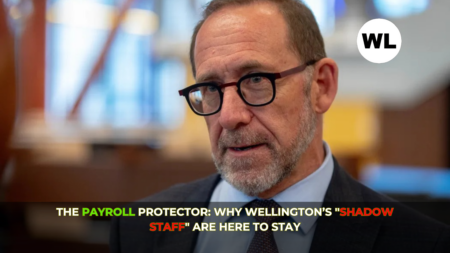
Wellington’s incoming Mayor, Andrew Little, has unveiled his new Council line-up — complete with deputy, committee chairs, and a revamped 18-month rotation system for all key roles.
On paper, it looks like a balanced structure. In practice, it’s a political web — one that neatly ties together Labour allies, centrist operators, and a few Greens. Beneath the talking points about “accountability” and “fresh energy”, this new setup quietly decides who holds the power, who gets the pay, and who’s positioned for political advancement.
The Red Thread of Power
At the top of the chain sits Andrew Little, former Labour Party leader and Cabinet Minister — now Wellington’s Mayor. His choice for Deputy Mayor, Ben McNulty, is also Labour-aligned, having topped the polls in the Northern Ward.
Together, Little and McNulty lock in the “Red” bloc — the political and financial centre of gravity at Wellington City Council for the 2025–28 triennium.
It’s a textbook case of political continuity: the capital’s most powerful roles — Mayor, Deputy Mayor, and key finance sub-committee chair — are all within the same Labour-leaning camp.
And Little’s innovation — 18-month appointments — gives him an extra layer of control. Every leadership role, including McNulty’s, comes up for review halfway through the term. That means the Mayor can reshuffle, reward, or remove appointees at will. It’s “accountability” in theory, but also a powerful tool for party discipline.
Who Gets What: The Money Behind the Roles
According to the Remuneration Authority, the base pay for Wellington councillors and leadership roles is as follows:
- Mayor: NZ$137,600
- Deputy Mayor: NZ$82,963
- Councillor (base): NZ$47,986
- Minimum councillor: NZ$30,946
Every committee chair and deputy earns additional allowances — though exact figures aren’t individually published. Historic council records show some senior councillors (such as Diane Calvert in 2021) earning over NZ$120,000 per year when chairing multiple major committees.
In other words, the more committees you sit on, the more your pay climbs. Power, loyalty, and money are tightly interlinked.
The Council Power Map
Here’s the full breakdown of the 2025–28 Wellington City Council — who’s who, what they control, where they sit politically, and what they’re earning:
| Name | Role(s) | Party / Alignment | Estimated Base Income* | Experience / Appointment Notes |
|---|---|---|---|---|
| Andrew Little | Mayor; Chair – Chief Executive Performance Review Committee | Labour (Red) | ~NZ$137,600 | Former MP and Cabinet Minister; extensive leadership experience; ultimate powerholder. |
| Ben McNulty | Deputy Mayor; Chair – Revenue & Financial Value Review | Labour (Red) | ~NZ$82,963 | Top-polling councillor; newer to senior leadership; appointment signals political trust. |
| Diane Calvert | Chair – Planning & Finance Committee | Centre-right / Blue | ~NZ$47,986 + allowance (~NZ$120k est.) | Veteran councillor, major finance role; significant influence and past high earnings. |
| Sam O’Brien | Deputy Chair – Planning & Finance Committee | Independent / Centre | ~NZ$47,986 + deputy allowance | Moderate influence; supports finance leadership; steady but not a power broker. |
| Nureddin Abdurahman | Chair – City Strategy & Delivery Committee | Independent / Centre | ~NZ$47,986 + chair allowance | Leads key infrastructure and planning portfolio; influence high, profile moderate. |
| Andrea Compton | Deputy Chair – City Strategy & Delivery Committee | Progressive / Centre | ~NZ$47,986 + allowance | Rising councillor; deputy role in critical committee; limited track record so far. |
| Laurie Foon | Chair – Social, Cultural & Environment Committee | Green | ~NZ$47,986 + chair allowance | Seasoned in environmental policy; Green representative in leadership tier. |
| Afnan Al-Rubayee | Deputy Chair – Social, Cultural & Environment Committee | Progressive | ~NZ$47,986 + allowance | Junior figure; limited public experience; possible political balancing pick. |
| Karl Tiefenbacher | Chair – Economic Growth & Development Subcommittee | Blue / Business-aligned | ~NZ$47,986 + sub-committee allowance | Leads growth portfolio; business focus; one of few Blue voices with real leverage. |
| Matthew Reweti | Deputy Chair – Economic Growth & Development | Labour (Red) | ~NZ$47,986 + allowance | Labour-aligned; deputy on growth; lower influence but strategically placed. |
| Ray Chung | Chair – CCO Review & Appointments Subcommittee | Independent / Blue | ~NZ$47,986 + chair allowance | Oversees board appointments; politically sensitive position with real patronage potential. |
| Tony Randle | Deputy Chair – CCO Review & Appointments; Deputy Chair – Regulatory Processes | Blue / Centre | ~NZ$47,986 + dual allowances | Multiple roles; earns well; more background operator than public leader. |
| Young | Chair – Grants Subcommittee | Green-aligned / Progressive | ~NZ$47,986 + sub-committee allowance | Controls grant funding; influence moderate but politically symbolic. |
| Rogers | Chair – Regulatory Processes Committee | Independent / Centre | ~NZ$47,986 + allowance | Handles traffic, naming, and licensing; operational but politically low-impact. |
| Rebecca Matthews | Deputy Chair – Revenue & Financial Value Review; Deputy Chair – Audit & Risk Committee | Progressive / Centre-left | ~NZ$47,986 + allowances | Trusted across committees; solid financial oversight roles; less public profile. |
*Income figures are based on the Remuneration Authority (2024/25) schedule and previous Wellington Council disclosures. Actual totals vary depending on allowances, multiple appointments, and meeting attendances.
Roles of Wellington City Council Committees
Each committee within the Wellington City Council has a distinct role — from managing finances to shaping social policy. Here’s how power and responsibility are divided across the new structure:
Planning & Finance Committee
Oversees the city’s long-term plan, annual budgets, and financial policies. This committee decides how ratepayer money is allocated, influencing everything from infrastructure investment to community funding. It’s one of the most powerful decision-making groups in Council.
City Strategy & Delivery Committee
Manages Wellington’s major projects, infrastructure delivery, and housing strategy. It’s where decisions about city growth, transport planning, and resilience are made. Members shape how Wellington evolves physically and economically over the next decade.
Social, Cultural & Environment Committee
Focuses on Wellington’s identity — supporting arts, culture, climate action, and community well-being. This committee steers policies on sustainability and inclusion, often championed by Green and progressive councillors.
Economic Growth & Development Subcommittee
Responsible for boosting Wellington’s economic performance, promoting business investment, and encouraging local employment. It sets the tone for how the capital partners with private enterprise and manages development opportunities.
CCO Review & Appointments Subcommittee
Oversees the city’s Council-Controlled Organisations (CCOs) — including Wellington Water, WellingtonNZ, and local museum trusts. This subcommittee reviews performance and makes recommendations on key board appointments, influencing how public assets are managed.
Regulatory Processes Committee
Handles bylaws, public licensing, traffic resolutions, and operational regulations. It may not make headlines, but its work directly affects how Wellington functions day-to-day — from road rules to building approvals.
Grants Subcommittee
Distributes community and cultural grants, supporting grassroots organisations and local initiatives. While its budget is smaller, its role in community engagement is symbolically significant.
Revenue & Financial Value Review Subcommittee
Acts as the Council’s internal watchdog for financial efficiency. Reviews spending, asset management, and cost recovery to ensure ratepayer funds deliver value for money. Its findings directly influence future budget decisions.
Audit & Risk Committee
Monitors governance standards, internal audits, and risk management across the Council. It safeguards financial integrity and transparency, ensuring compliance with legal and ethical standards.
Note: Committee responsibilities are set under Wellington City Council’s 2025–28 governance structure. Chairs and deputies rotate every 18 months under Mayor Andrew Little’s new leadership framework.
So Who Actually Has the Power?
If you map influence against party lines, the result is clear:
- Red (Labour): Controls the Mayor’s office, Deputy, and key finance review sub-committee — real power and agenda-setting authority.
- Blue (Centre/Right): Holds finance chair (Calvert) and CCO oversight (Chung, Randle). Financially savvy, but secondary in political clout.
- Green: Limited to social/environment portfolios. Strong voice in values, but not in budgets or appointments.
Political Appointments or Genuine Merit?
Some of the newer deputy appointments raise eyebrows. Several councillors without substantial governance experience have landed deputy roles in high-stakes committees.
The 18-month rotation system adds another layer of political control — effectively allowing the Mayor to reward allies or sideline dissenters mid-term.
Follow the Money, Follow the Loyalty
The more committees you’re on, the more you earn — and the closer you are to the Mayor, the more likely you are to be on several.
That means loyalty, not just expertise, determines who sits at the table. It’s a system where political proximity equals pay.
The Bottom Line
- Who has the power? Labour (Red) — Andrew Little and Ben McNulty’s team run the show.
- Who can make the biggest difference? Chairs of Planning & Finance, Strategy & Delivery, and CCO Review — those who control spending and appointments.
- Who’s getting paid most? The Mayor, Deputy, and multi-committee chairs — likely earning well above the base NZ$48k rate.
- Who’s out of their depth? A few deputies and newcomers — possibly placed for politics over proven experience.
- Who’s footing the bill? You are — through rates, rising costs, and a remuneration structure that rewards loyalty as much as leadership.
TRUTH SEEKER
Instantly run a Quiz with friends... about the article. Interact more & analise the story. Dig in, catch out biased opinions, and "fact check" with TRUTH SEEKER by ONENETWORK WELLINGTONLIVE 👋
Do you agree with the main argument of this article?
Total votes: 0
Who is the Mayor of Wellington mentioned in the article?
Bias Analysis
Fact Check Summary
True
Source: Wellington Council Remuneration Authority
True
Source: Article