



The US capture of Venezuelan president Nicolás Maduro marks a decisive shift in global power politics. This was not a symbolic gesture. It was a strategic move rooted in old doctrine and modern leverage. The Monroe Doctrine still casts a long shadow, and Washington has now shown it will enforce it with kinetic force. That message was aimed as much at Beijing as Caracas.
China stands exposed. Beijing holds about US$19 billion in outstanding principal through China Development Bank’s oil-for-loans programme with Venezuela. That single exposure forms the largest commodity-backed position in China’s wider US$60 billion portfolio. Those loans relied on steady flows of heavy Venezuelan crude. Chinese refiners in Shandong rebuilt plants to handle that oil. They did so because Western buyers stayed away and prices sank.
Maduro’s arrest puts that entire structure at risk. Contracts now hang in uncertainty. Repayment assumptions look fragile. Political guarantees have vanished overnight. China plans for decades, yet even long strategies suffer sudden shocks. Wellington analysts understand this dynamic well. When China’s overseas bets wobble, global markets react quickly.
Beijing’s response so far reveals the bind. Chinese ministers condemned the US action as unilateral and abusive. They warned of instability. They did not reinforce Venezuela’s defences. That gap between words and action matters. In Chinese political culture, loss of face carries weight. The United States has now shown it will use force. That demonstration increases pressure on Beijing to respond somewhere else.
Energy sits at the centre of the fallout. China will likely redirect oil purchases to the Middle East. Those barrels cost more. Shipping costs rise too. New Zealand imports almost all its fuel. Wellington drivers, bus services, and freight operators feel price rises first. Higher fuel costs also push up food prices and construction costs across the city.
There is a deeper financial risk. Disruption to China’s oil security revives incentives to weaken reliance on the US dollar. Beijing has explored alternatives for years through trade settlement deals and digital currency trials. This shock adds urgency. Any serious move away from the dollar would shake global markets. KiwiSaver funds track those markets. The New Zealand dollar would not stay immune.
Diplomacy in Wellington now tightens. New Zealand values an independent foreign policy. It also relies on stable ties with both Washington and Beijing. Officials at MFAT face narrow choices. Silence risks looking complicit. Open condemnation risks economic retaliation. Every line drafted in Wellington carries weight in this climate.
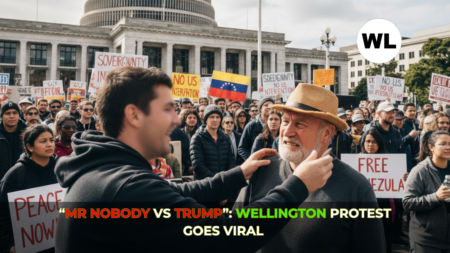
Public debate will follow. Wellington has a long protest tradition and a strong interest in international law. The arrest of a sitting president without UN mandate troubles legal scholars here. Small states depend on rules to restrain power. When those rules erode, the cost lands on countries like New Zealand.
For many Wellingtonians, this story may feel distant. It is not. Global power moves shape fuel prices, interest rates, and job security. They influence public transport budgets and household costs. They determine how much room governments have to respond at home.
Maduro’s arrest shows how fast geopolitics can harden. It also shows how little shelter distance provides. Wellington sits at the junction of diplomacy, markets, and consequence. In this new phase of rivalry, the effects arrive quickly.
TRUTH SEEKER
Instantly run a Quiz with friends... about the article. Interact more & analise the story. Dig in, catch out biased opinions, and "fact check" with TRUTH SEEKER by ONENETWORK WELLINGTONLIVE 👋
Do you agree with the main argument of this article?
Total votes: 4
What was the main reason behind Maduro's arrest according to the article?
Bias Analysis
Fact Check Summary
True
Source: Article
True
Source: Article