


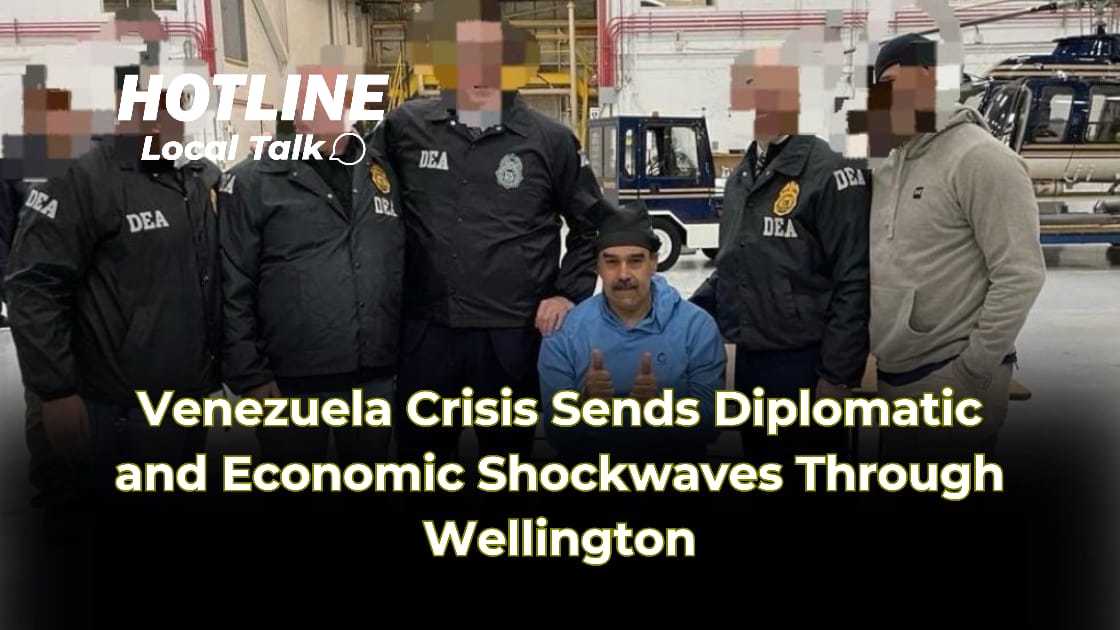
Wellington has felt an unmistakable ripple after the United States launched a military operation in Venezuela, arresting President Nicolás Maduro and declaring temporary control over the country. While the action unfolded thousands of kilometres away, its consequences are already landing close to home, in the offices of Parliament, the Ministry of Foreign Affairs and Trade, and across household budgets in the capital.
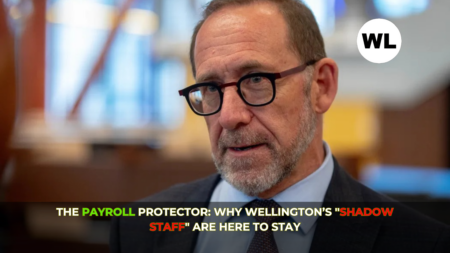
Foreign Minister Winston Peters issued New Zealand’s first official response, saying the government was “concerned” and expected all parties to act in accordance with international law. The wording was deliberate. Peters, a veteran of global diplomacy, chose caution over condemnation, signalling unease without burning bridges. In Wellington, where foreign policy nuance is both craft and currency, that choice was closely noted.
Winston Peters also reiterated advice against travel to Venezuela and confirmed consular support for New Zealanders. Behind the scenes, MFAT staff based in Wellington are actively monitoring developments, assessing legal implications, and preparing for possible fallout at the United Nations. The city hosts the machinery that keeps New Zealand connected to the world, and moments like this stretch that machinery hard.
The impact extends beyond diplomacy. Venezuela sits atop some of the world’s largest oil reserves, and US President Donald Trump has made clear his interest in them. Markets reacted fast. Any sustained instability risks lifting global oil prices, which feeds directly into fuel costs in New Zealand. For Wellingtonians, that means higher commuting costs, pressure on public transport funding, and increased freight expenses that flow through to everyday prices.
Political tension is also rising. The Green Party has accused the government of silence and called for Prime Minister Christopher Luxon to condemn what it describes as an unlawful invasion. That criticism resonates in Wellington, a city where protest culture is strong and foreign policy debates often spill onto the streets around Parliament and the US Embassy in Thorndon. Organisers are already discussing demonstrations, reflecting unease among residents who value New Zealand’s independent voice on the world stage.
Legal experts based in New Zealand have questioned the lawfulness of the US action. International law scholars argue that self-defence claims tied to drug trafficking stretch established doctrine. Those concerns matter deeply in Wellington, which benefits from a rules-based international system. As a small state, New Zealand relies on international law to restrain the power of larger nations.
Winston Peters’ statement acknowledged that reality without explicitly judging Washington. His critics say the moment calls for stronger language. Supporters argue restraint preserves New Zealand’s ability to influence outcomes through diplomacy. Either way, the decision underscores Wellington’s balancing act between moral positioning and strategic caution.
There is also a wider fear echoing through policy circles in the capital. If the arrest of a sitting president by foreign forces goes unanswered, it may weaken global norms. Analysts warn that such precedents could embolden other powers to act unilaterally. That prospect alarms officials who spend their careers trying to prevent precisely that erosion.
For Wellington, the Venezuela crisis is a reminder that global shocks never stay abstract. They shape fuel prices, investment confidence, political debate, and diplomatic workload. As events unfold, eyes remain on Winston Peters and the government’s next move. In this city, where international decisions quickly become local realities, what happens next matters.
TRUTH SEEKER
Instantly run a Quiz with friends... about the article. Interact more & analise the story. Dig in, catch out biased opinions, and "fact check" with TRUTH SEEKER by ONENETWORK WELLINGTONLIVE 👋
Do you agree with the main argument of this article?
Total votes: 5
Who issued New Zealand's first official response to the Venezuela crisis?
Bias Analysis
Fact Check Summary
False. The United States did not declare temporary control over Venezuela.
Source: Article
False. Wellingtonians are facing higher commuting costs due to the Venezuela crisis.
Source: Article